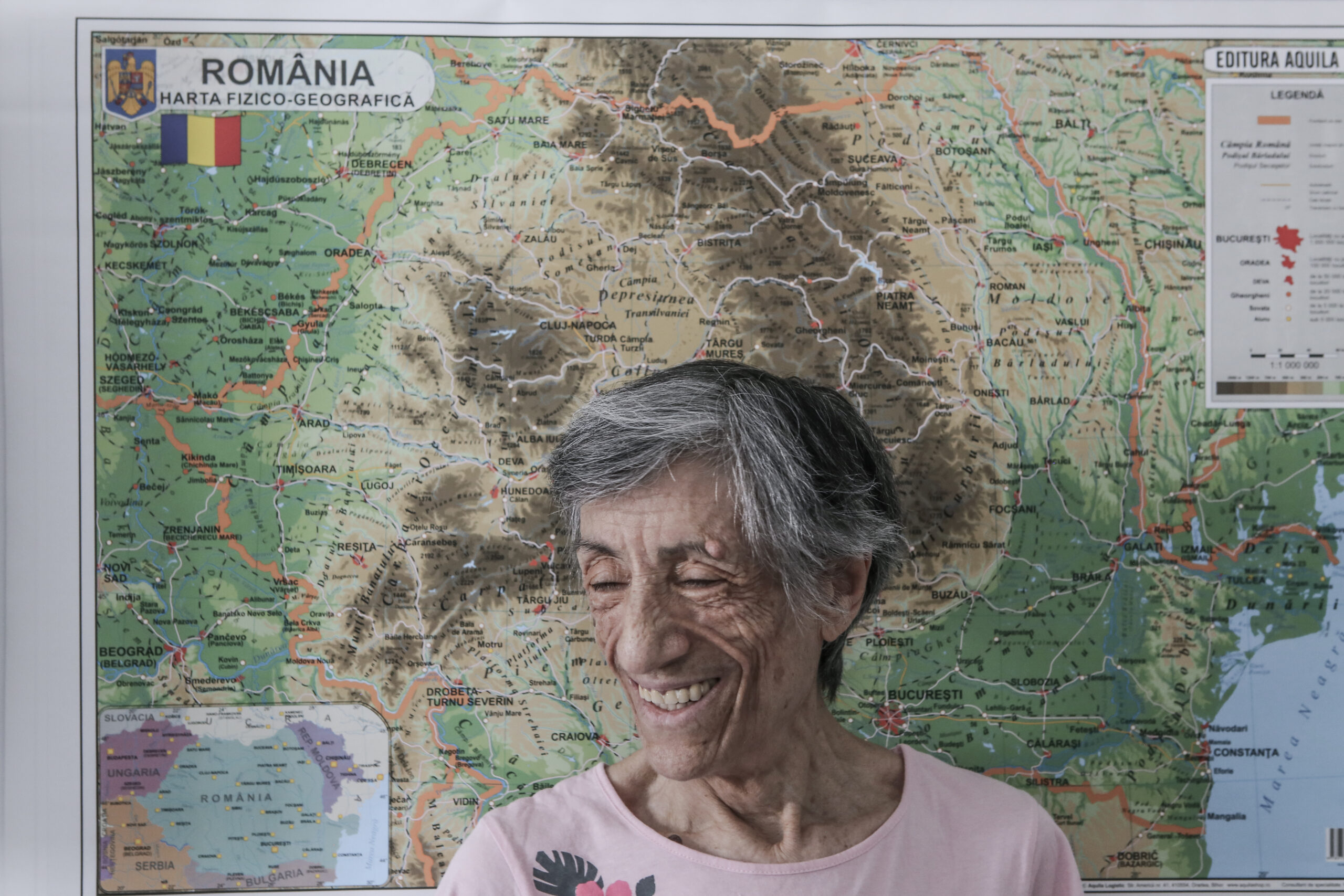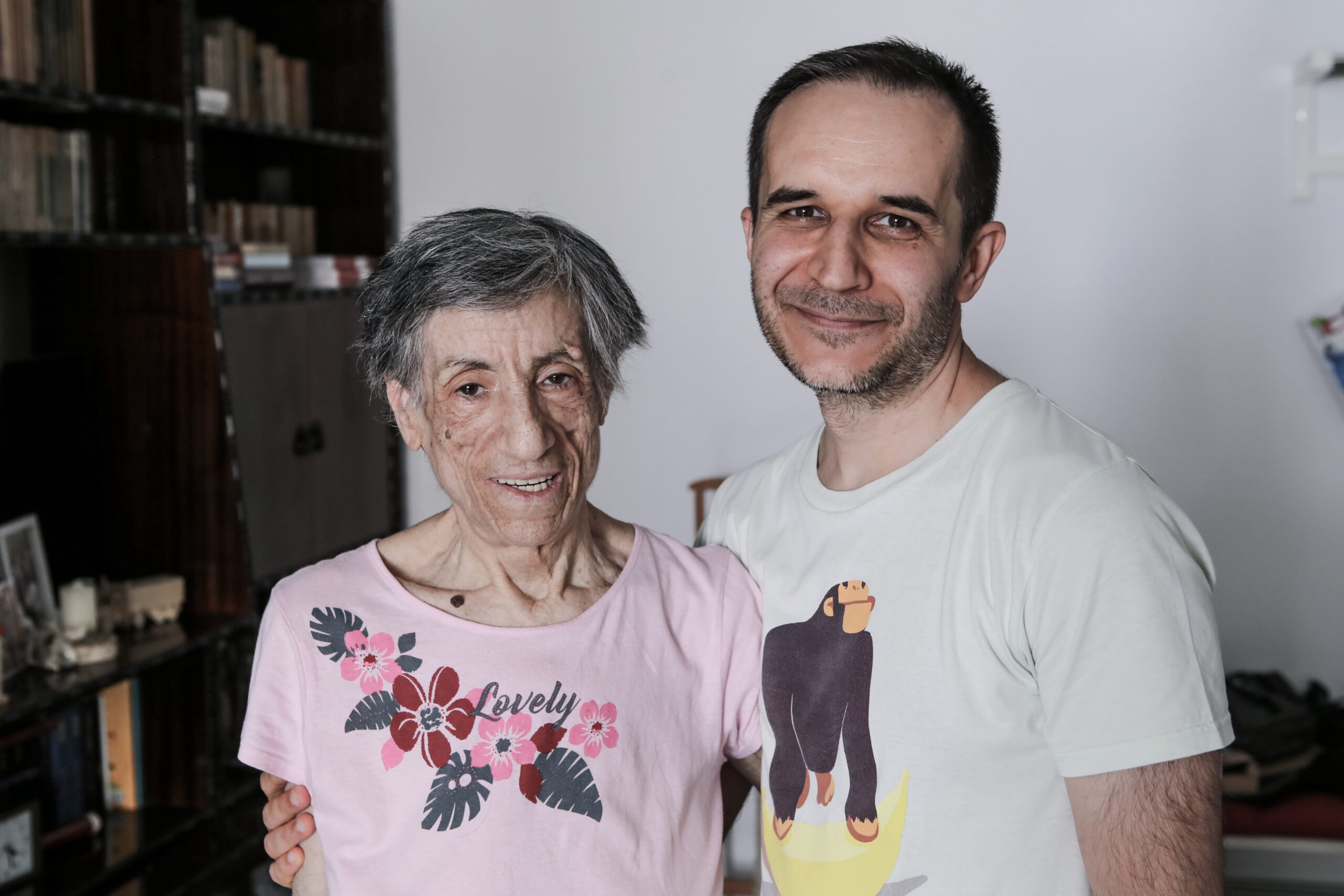
A summer trip to Romania led me to search for a local family affected by Huntington’s Disease. I first got in touch with Andra, from the Romanian Huntington Association who immediately made herself available to help me with the search.
After 3 weeks she told me that she had found a family interested in meeting me for a possible participation in the project. An exchange of telephone contacts allowed us to communicate directly on WhatsApp.
Iulian began to tell me the story of his family in great detail in fluent English.
He lives in Bucharest, but his family comes from a rural area. His grandparents came from one of the many villages of the Great Romanian Plain, called Bărăgan. Simple people, labourers, humble farmers, without the negative connotation of the term. People who worked hard on the land in the era of communism.
They had 3 children: Aunt Georgeta born in 1942, Uncle Marin in 1948 and Ulian’s mother, Dumitra, in 1954.
As a child Iulian used to spend his summer holidays there, and he remembers his grandfather Eugen as a man with a very strong temperament, and often lost his temper. He had a brother who was considered “crazy”. This was about 40-50 years ago, in a country that was centuries behind Western Europe and people did not even have access to medical care.
Years passed and the grandparents died.
The eldest daughter (Aunt Georgeta) began to show signs of severe psychiatric disorders. She had a daughter (Liliana), also who began to show signs of dementia and in 2000, at the age of 28, was diagnosed with schizophrenia. Georgeta died in 2004 at the age of 62.
In 2001, the second son (Uncle Marin) also began to experience panic attacks, severe speech difficulties, involuntary movements and major depression. He had two children: Nicoleta (born in 1972) and Sorin (born in 1976) who both began to manifest the first symptoms.
In 2006, the third daughter (Dumitra) also started presenting the same psychiatric disorders, as well as motor and balance difficulties.
We are still far from the correct diagnosis that only arrived for all the family members between 2014 and 2015.
The first diagnosis of Huntington’s Disease in the family immediately clarified what was happening to the parents, uncles, and cousins. Then, when they all decided to undergo genetic testing, they all tested positive except Iulian, who was the only one in the entire family not to be affected.
The affected cousins also have children of their own, who being young and asymptomatic, have not yet decided to take the test.
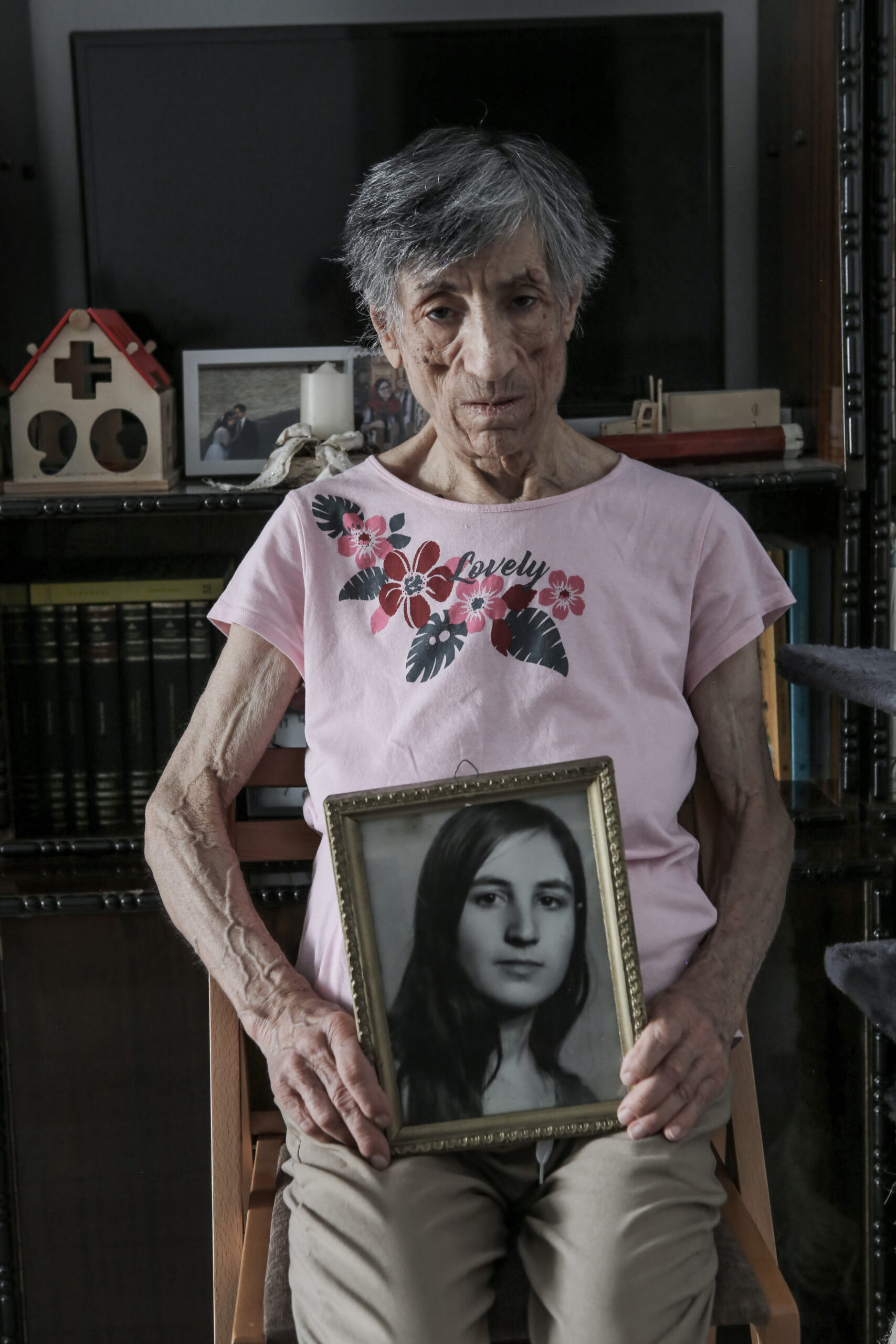
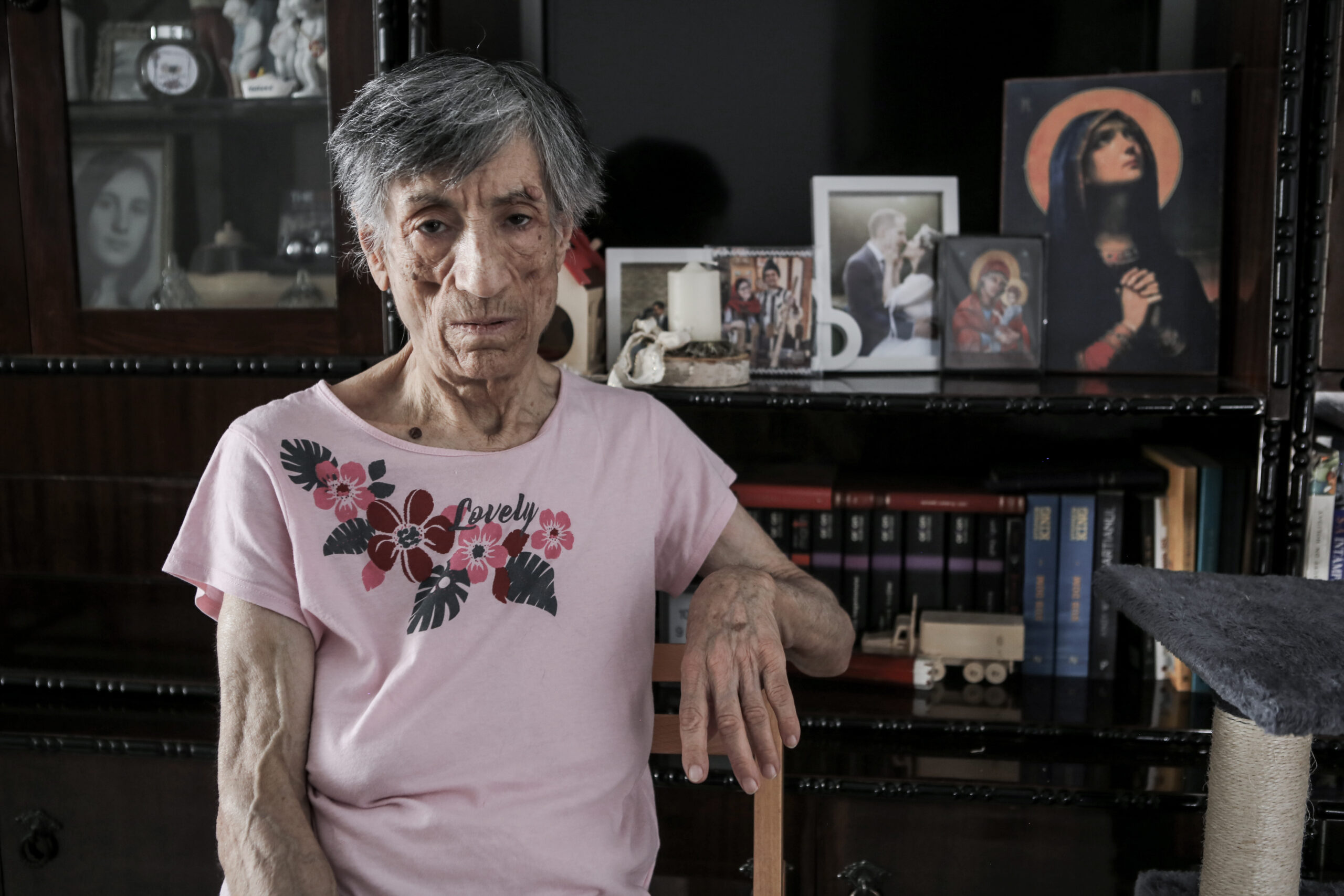
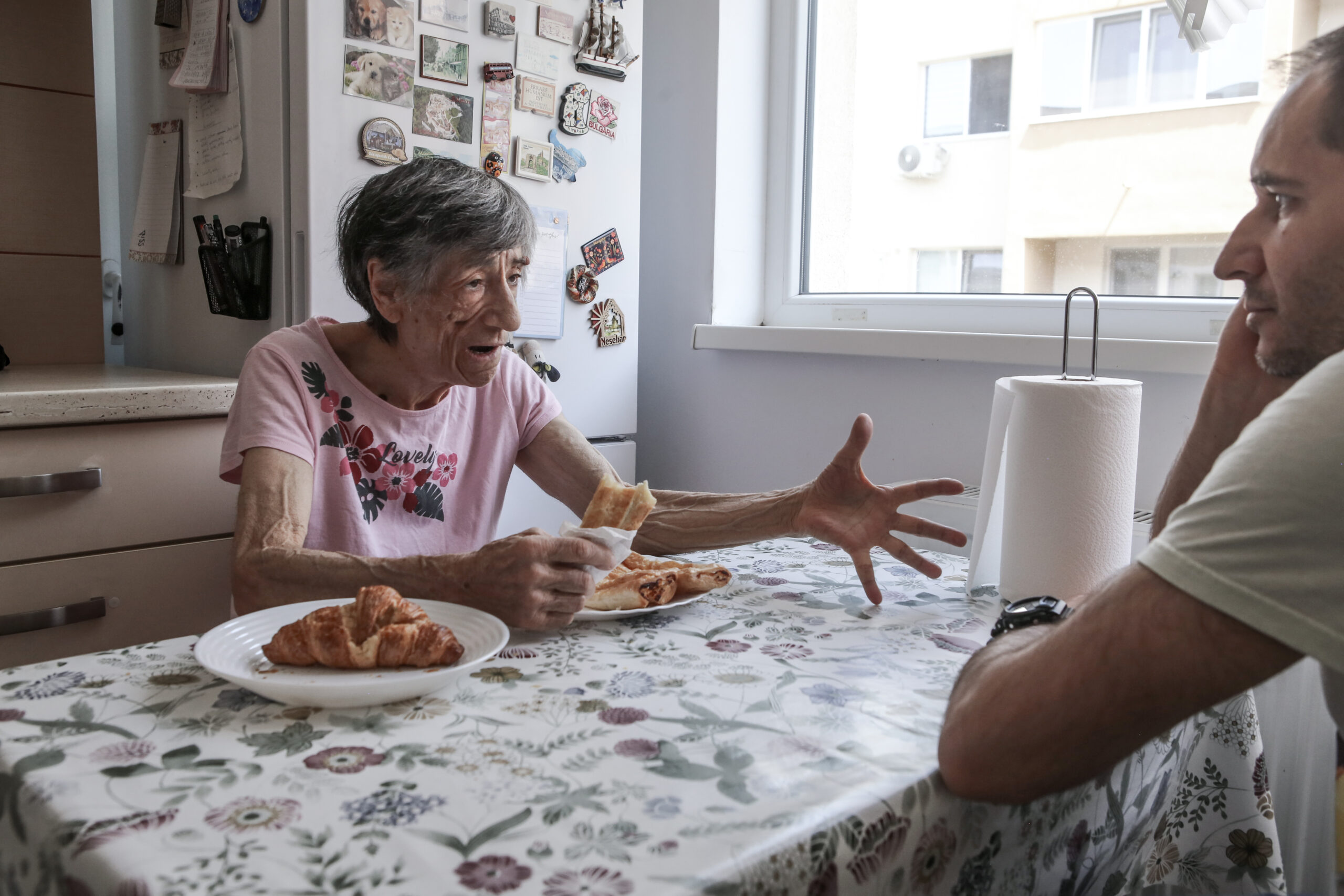
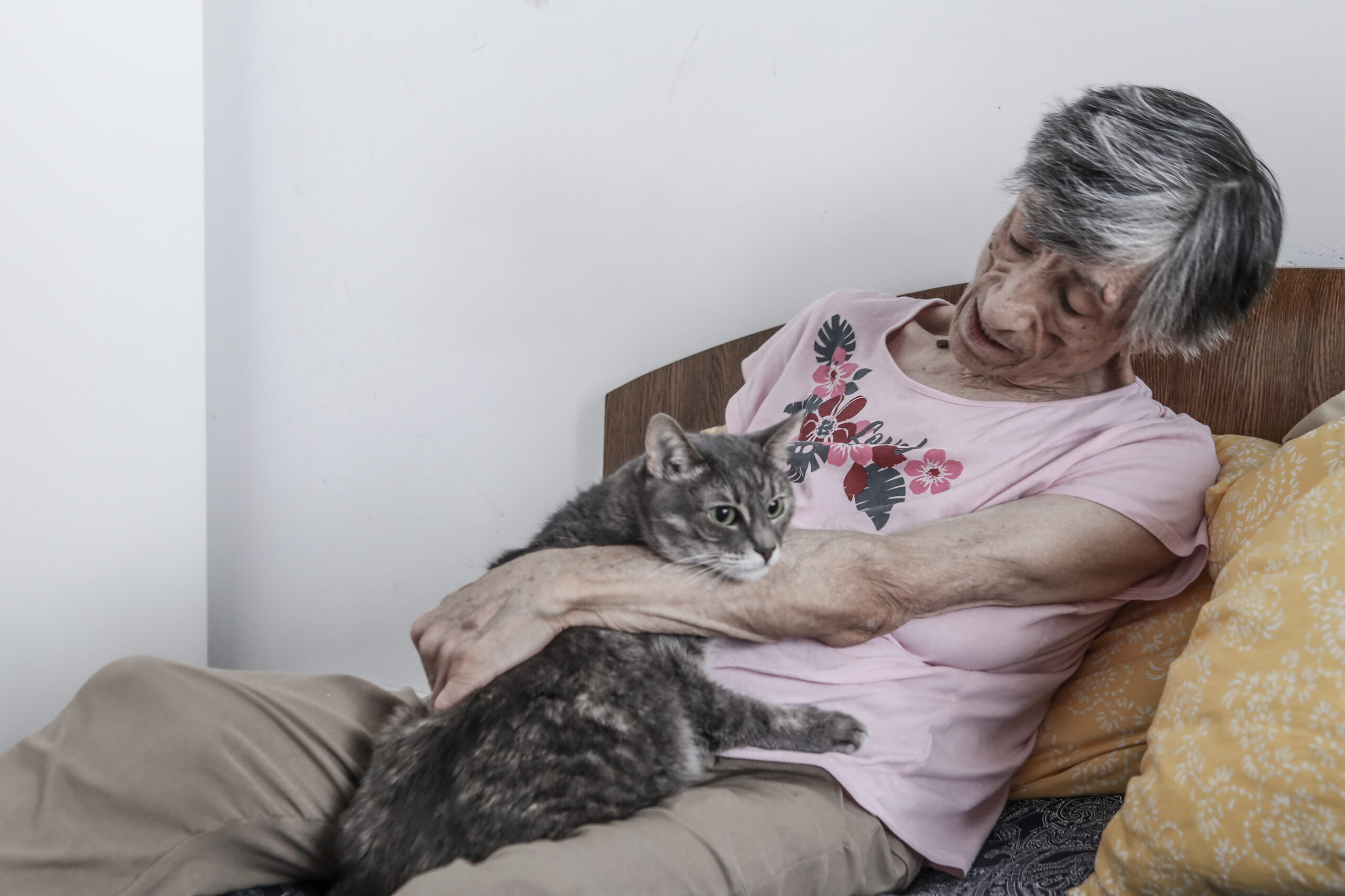
When I proposed my photographic project to Iulian, he initially expressed his concerns about his mother’s participation in it. She lives alone, with a cat, in a small apartment and rarely goes out. She only speaks Romanian and has speech difficulties. In his opinion, a family with a more active daily life would be more suitable for the project. He was worried that I might be disappointed by the situation and feel like I was wasting my time. I reassured him that the most important thing for me, especially on a human level, is to empathize with them and share their normal daily life, as simple or boring as it may seem.
There is another fundamental aspect to consider in Dumitra’s life. Long before Huntington’s Disease, she was infected with HIV and has been HIV-positive since 2001. They were already fighting this devastating disease and all the people’s prejudices when Huntington’s Disease also appeared.
It was natural to ask whether God existed.
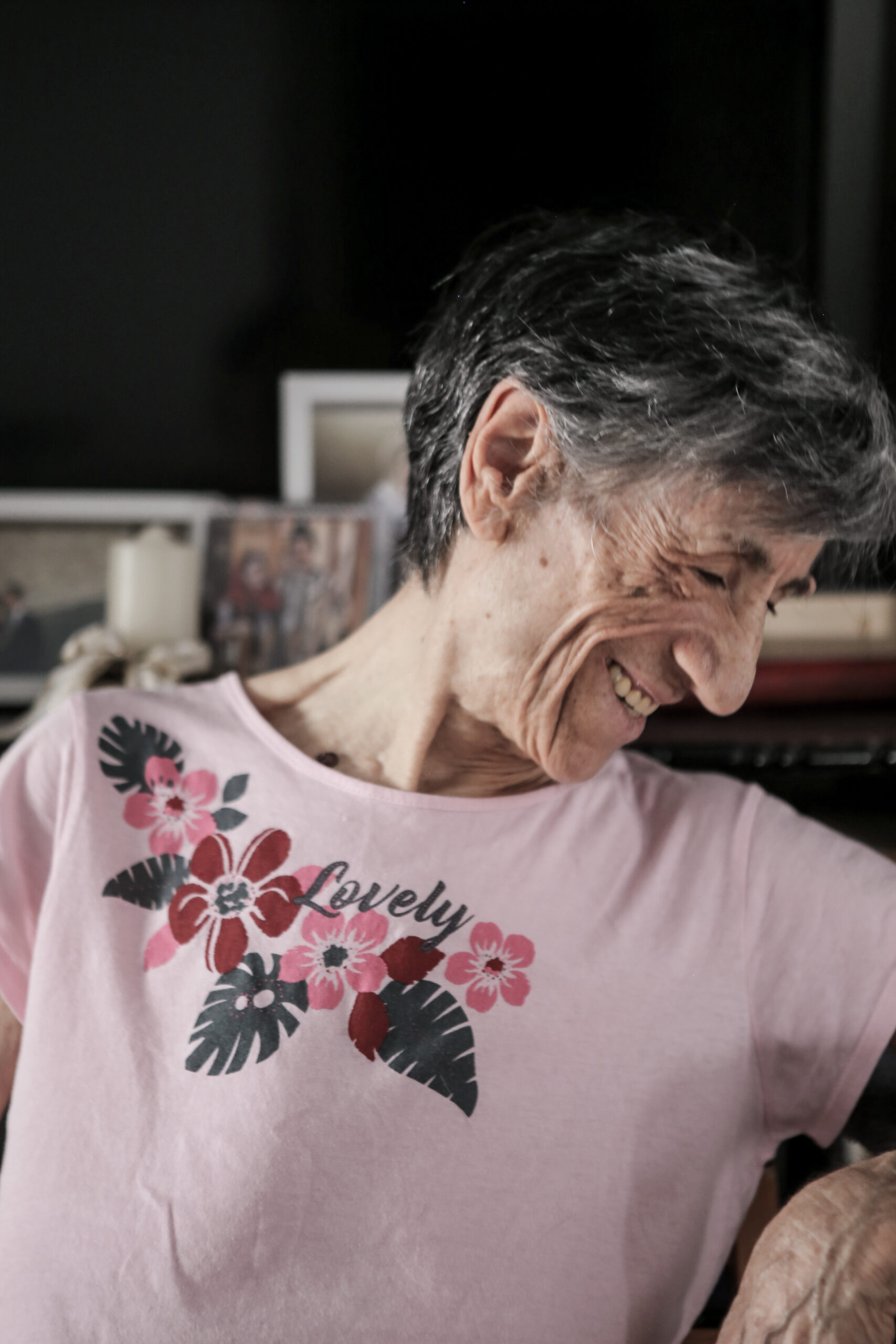
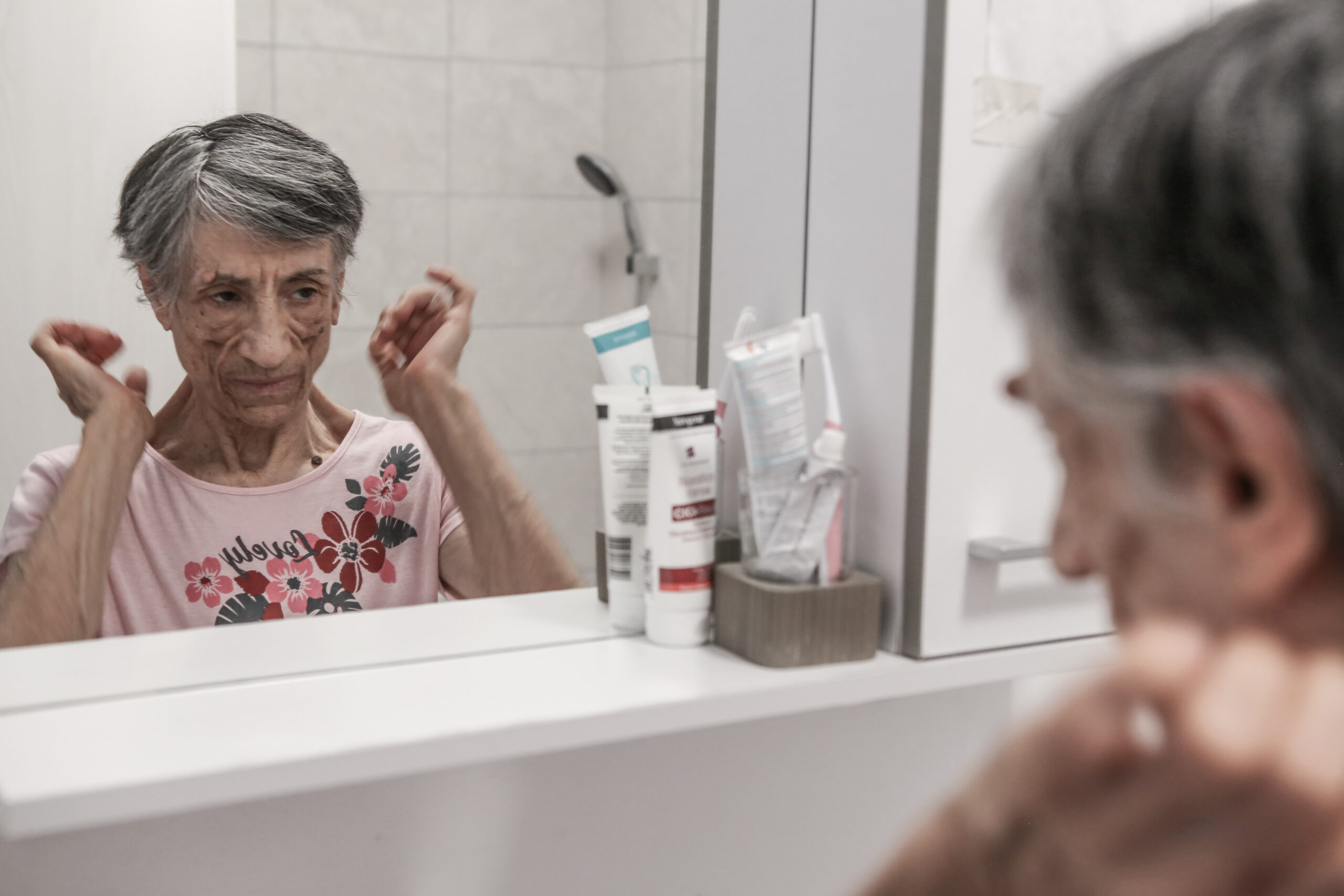
HIV has changed her appearance, and she suffers greatly from people observing her in the street with curiosity or mockery.
Iulian told her about the project, about me, about my relationship with the disease, that I would like to spend time with her and take pictures of her. She accepted without hesitation. She made herself available to contribute towards raising awareness about the disease with the intention of helping other people.
I feel a strong joy and a great emotion at the idea of being able to tell their story.
Dumitra worked in an electronics factory. After the 1989 revolution when all the factories were privatized and closed, she began cleaning and cooking for a rich family.
She supported Iulian without help from other people in his high school studies; teaching him to be an honest, fair person and to respect everybody regardless of their social status.
Fighting against a hard and unfair life of sacrifices, a violent husband, many deceased family members and finally the diseases (HIV and Huntington’s Disease) have turned her into a strong woman.
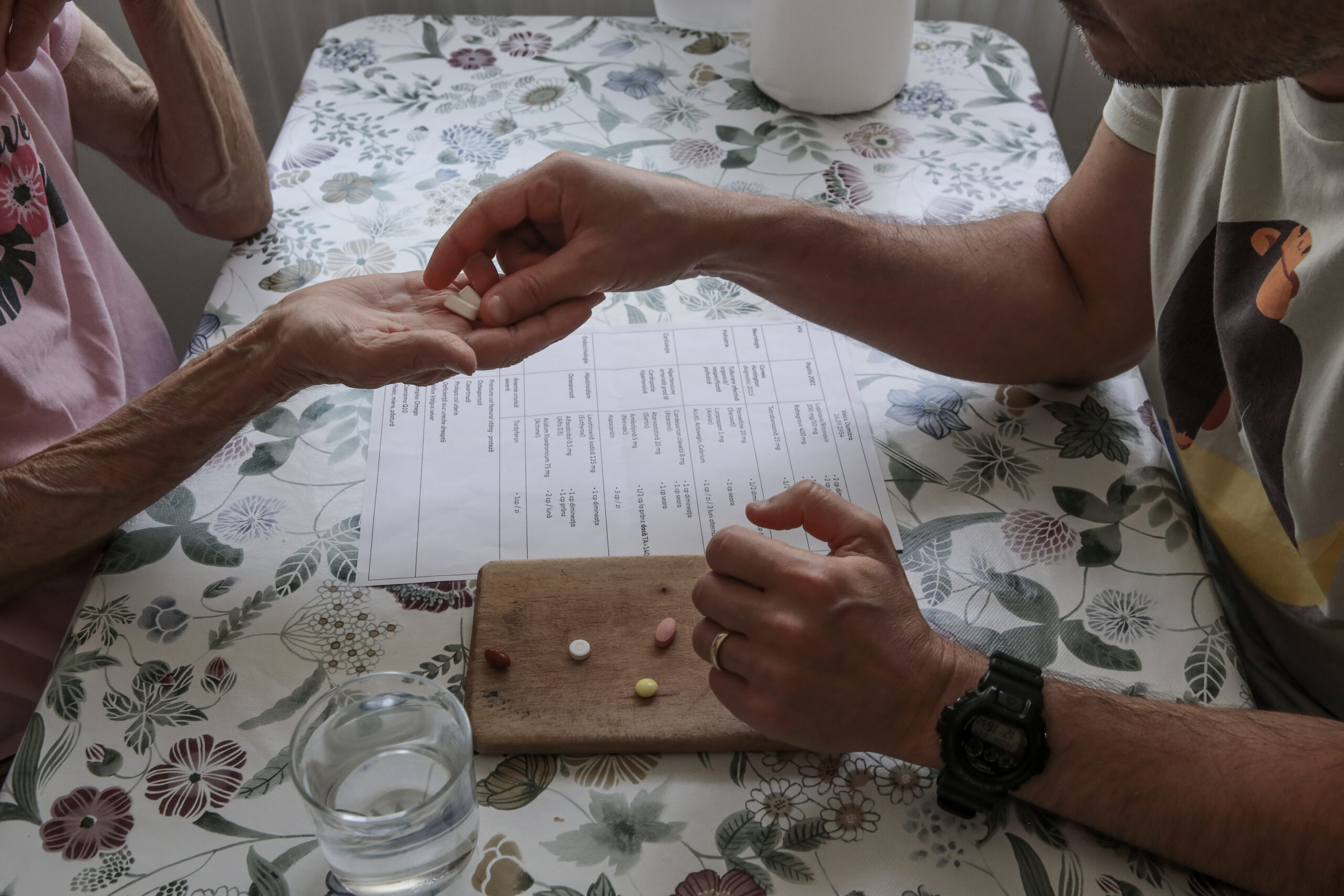
Dumitra has trouble sleeping, her nights are full of nightmares. She falls asleep around 4 or 5 in the morning and then wakes up around 11 to start the drug therapies for the various pathologies she suffers from.
Iulian felt a moral, ethical but also legal obligation to give me all the information and reassurance about HIV. In reality, I did not have any concerns about it.
I finally arrived at their house, feeling an immediate sense of familiarity, without embarrassment or discomfort on anyone’s part.
Iulian stayed with us for a while and told me about their private life in detail, we talked about illnesses, hopes, fears and other topics.
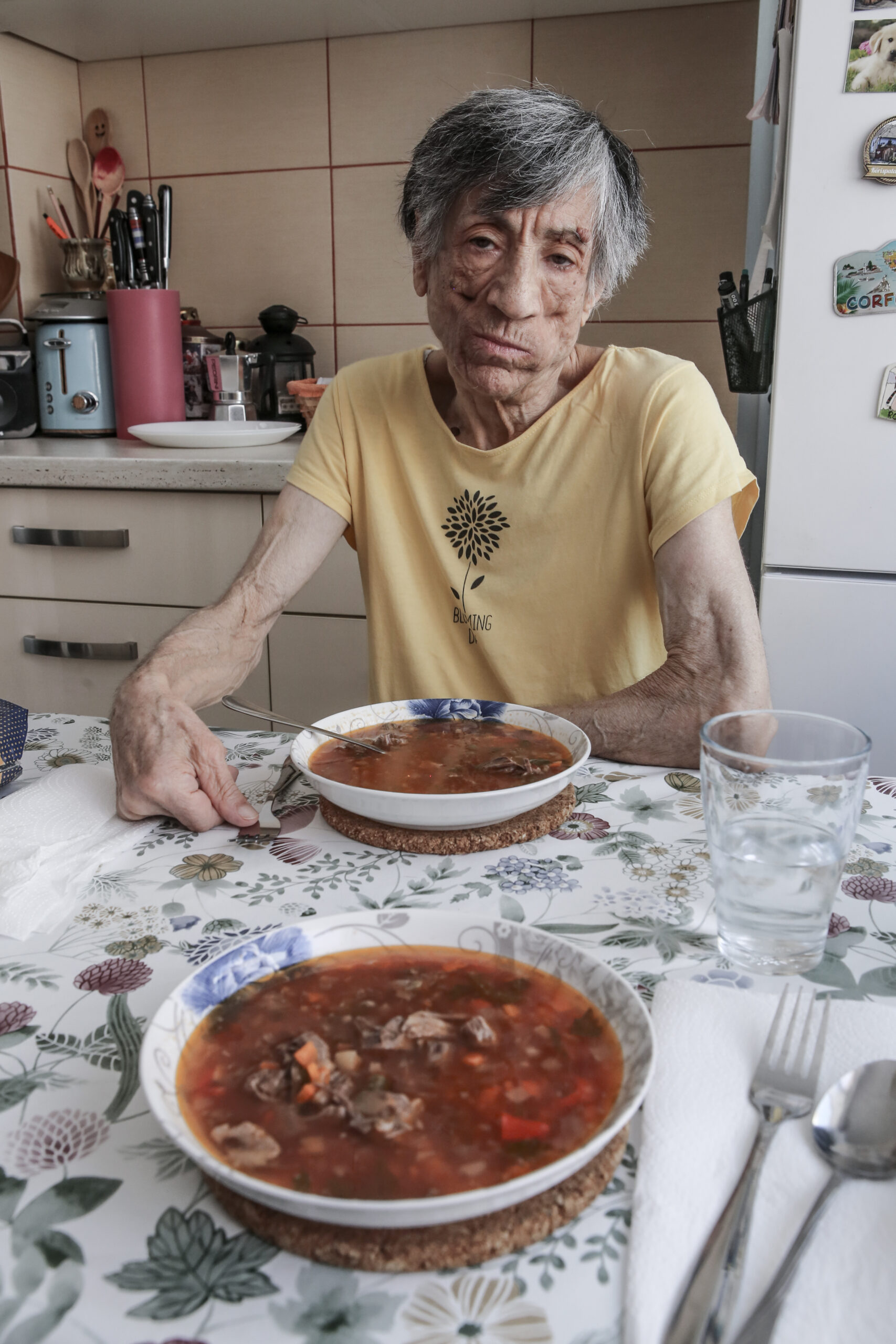
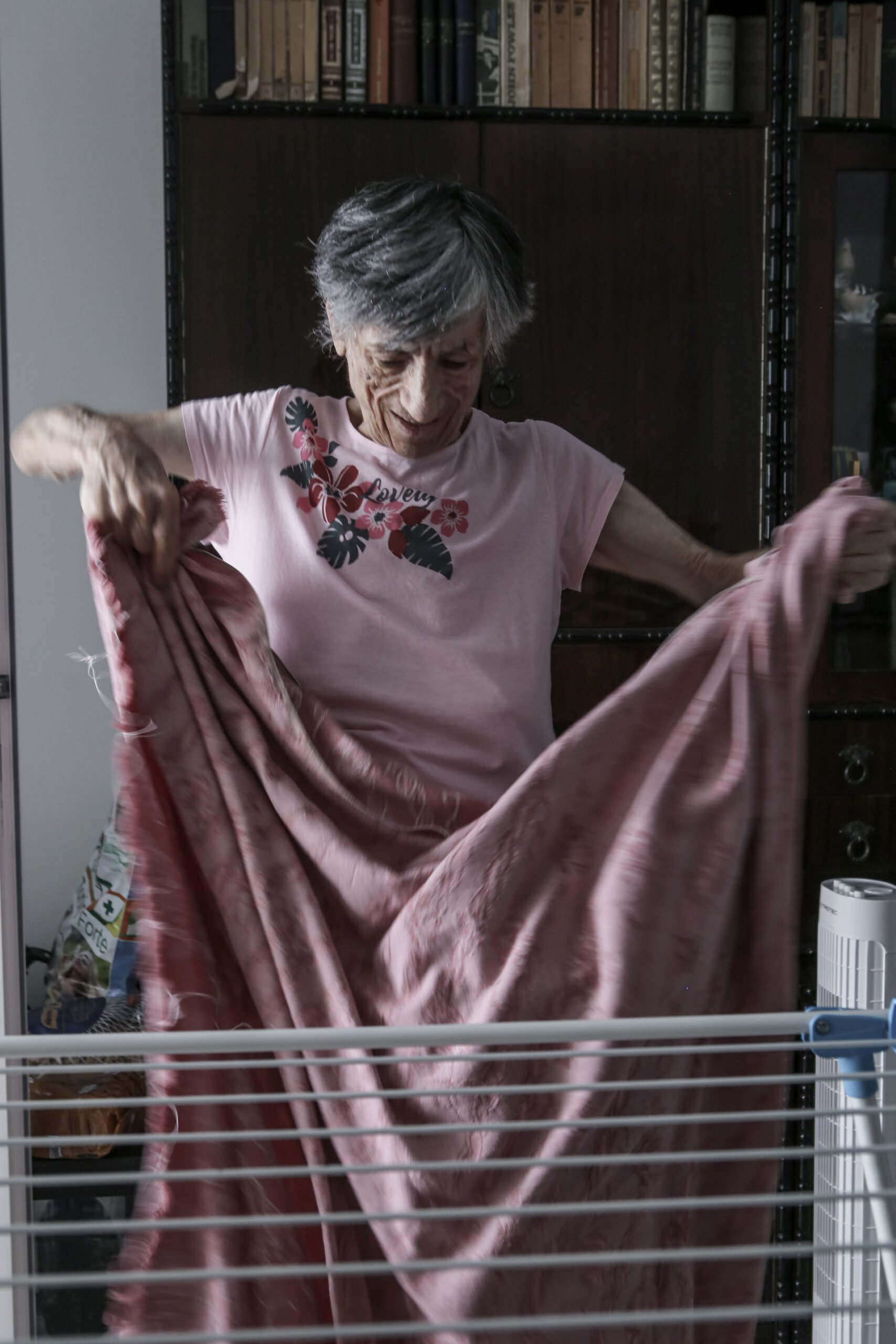
He then had to go home to his wife, and I was left alone with Dumitra. We had lunch together. With apparent uncertainty, Dumitra managed to do some small household chores and offered to be photographed.
We used vocal translators to communicate. We exchanged a few sentences, but with a deep and open heart.
On the one hand, Iulian had told me that he felt a strong sense of guilt for not being able to do more for his mother. On the other, Dumitra told me that she felt like a burden to her son and that she would have liked him to think more about himself and his own life.
I tried to make each of them understand that a deep bond of love unites them and that they must face this situation by supporting each other, accepting what they can do within their limits, without feeling guilty.
I knew that I had in front of me two extremely strong people, but like everyone else, with their own fragilities and the need to receive a little comfort and understanding.
After a couple of days of daily life and shared emotions, I said goodbye discreetly, but with the feeling of having created a sincere bond of affection and respect between us.