
Huntington’s disease is a rare, genetic, neurodegenerative disease, identifiable through a DNA test. It is a progressive brain condition caused by a defective gene, leading to nerve cell degeneration. This results in physical and mental decline, with symptoms typically emerging between the ages of 35 and 55, though they can appear at any age.
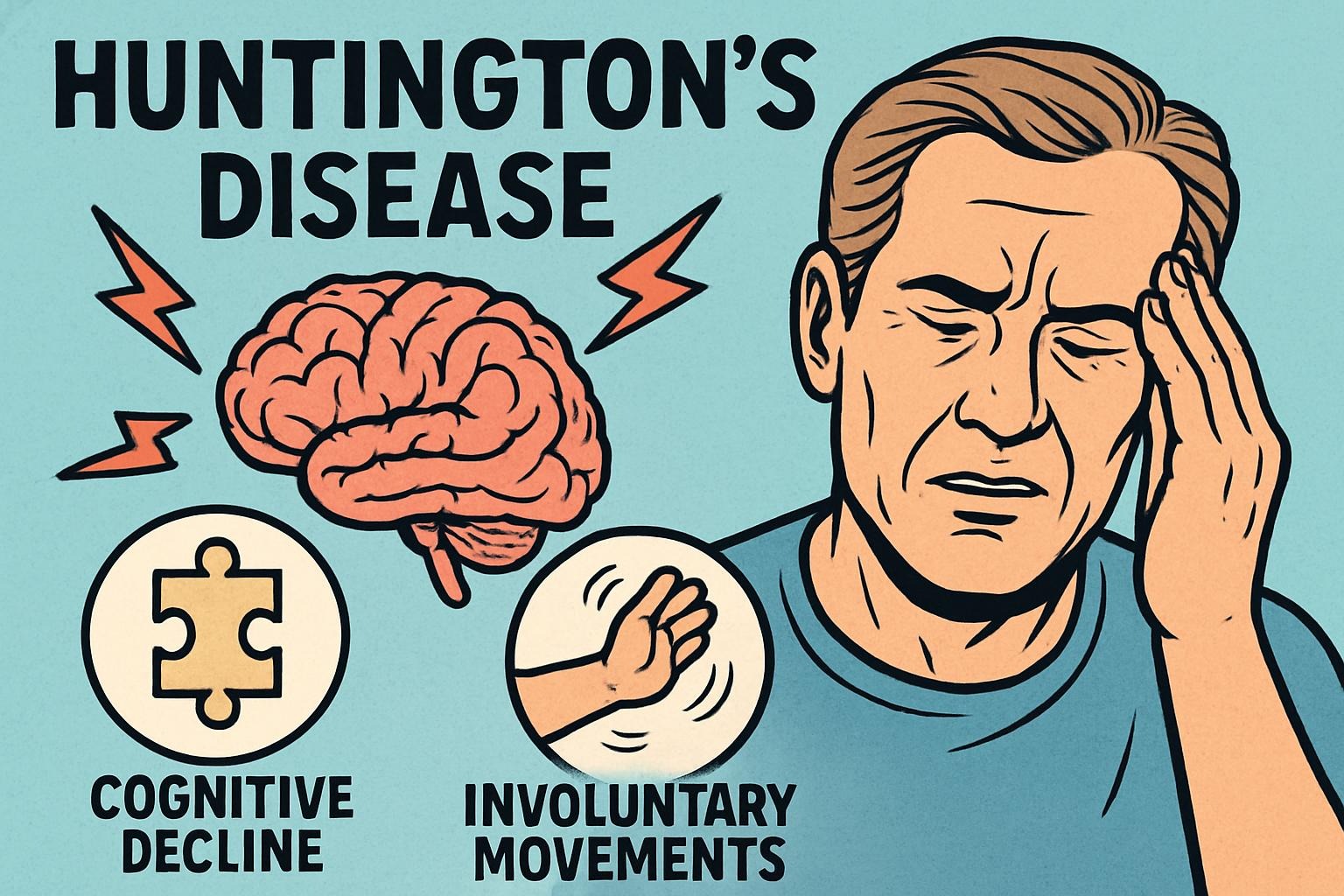
Symptoms include involuntary movements, cognitive decline, and behavioral disorders.
As the disease advances, difficulties in coordination, swallowing, and speaking arise. Huntington’s disease is hereditary: each child of an affected parent faces a 50% risk of inheriting the gene.
While there is no cure, treatments are available to manage some symptoms and improve quality of life.
Causes and Genetics
Huntington’s disease is caused by a mutation in the HTT gene located on chromosome 4. This gene produces a protein called huntingtin, which plays a crucial role in nerve cell function in the brain. The mutation involves an abnormal repetition of the CAG nucleotide sequence, which leads to the production of an altered, toxic form of the huntingtin protein. This accumulation causes neuronal damage and eventual cell death, particularly in areas of the brain responsible for movement, cognition, and emotion.
The disease follows an autosomal dominant inheritance pattern, meaning that a child has a 50% chance of inheriting the disorder if one parent carries the faulty gene. This makes genetic counseling and testing important for families affected by Huntington’s disease.
Symptoms and Progression
Huntington’s disease typically begins between the ages of 30 and 50, although symptoms can appear earlier or later. The progression of the disease varies among individuals, but it usually follows a predictable course:
- Motor Symptoms: Early signs include subtle involuntary movements, such as twitching or fidgeting. As the disease advances, these movements become more pronounced, leading to chorea—uncontrollable jerky movements. Over time, muscle rigidity and coordination problems can develop, affecting speech, swallowing, and walking.
- Cognitive Decline: Patients experience difficulties with concentration, memory, and decision-making. As cognitive functions deteriorate, it becomes challenging to perform daily tasks, leading to increased dependence on caregivers.
- Psychiatric and Behavioral Changes: Depression, irritability, anxiety, and mood swings are common. In some cases, patients may experience hallucinations, delusions, or obsessive-compulsive behaviors.
Diagnosis and Testing
Diagnosis of Huntington’s disease is based on clinical evaluation, family history, and genetic testing. A neurologist may perform a series of neurological and psychological tests to assess symptoms. Genetic testing can confirm the presence of the HTT gene mutation, providing a definitive diagnosis.
Management and Treatment
Currently, there is no cure for Huntington’s disease, but treatments are available to manage symptoms and improve quality of life. Medications such as tetrabenazine can help control chorea, while antidepressants and antipsychotics may address psychiatric symptoms. Physical therapy, occupational therapy, and speech therapy play essential roles in maintaining mobility and communication skills.
Research and Future Directions
Ongoing research aims to better understand the underlying mechanisms of Huntington’s disease and develop potential treatments. Gene therapy, stem cell therapy, and RNA interference are promising areas of study that may offer hope for future interventions. Clinical trials are also exploring drugs that could slow disease progression or alleviate symptoms.
Support and Resources
Living with Huntington’s disease can be challenging, not only for patients but also for their families and caregivers. Support groups, counseling, and educational resources can provide valuable assistance. Organizations such as the Huntington’s Disease Society of America and the European Huntington’s Disease Network offer support, advocacy, and information for those affected by the disease.
In conclusion, while Huntington’s disease presents significant challenges, advancements in research and supportive care continue to improve the lives of those impacted by this genetic disorder. Through collaboration and dedication, the scientific community remains committed to finding effective treatments and, ultimately, a cure.
Resources
EHDN: the European Huntington’s Disease Network. An indipendent nonprofit network dedicated to advanced research conducting clinical trials and improving care for people impacted by Huntington’s disease.
Enroll-HD: the largest observational study and clinical research platform on Huntington’s disease.
HD BUZZ: Huntington’s disease research news. In plain language. Written by scientists. For the global HD community.
Moving Forward: A project created by EHA to mobilize the HD community to participate in studies and trials